
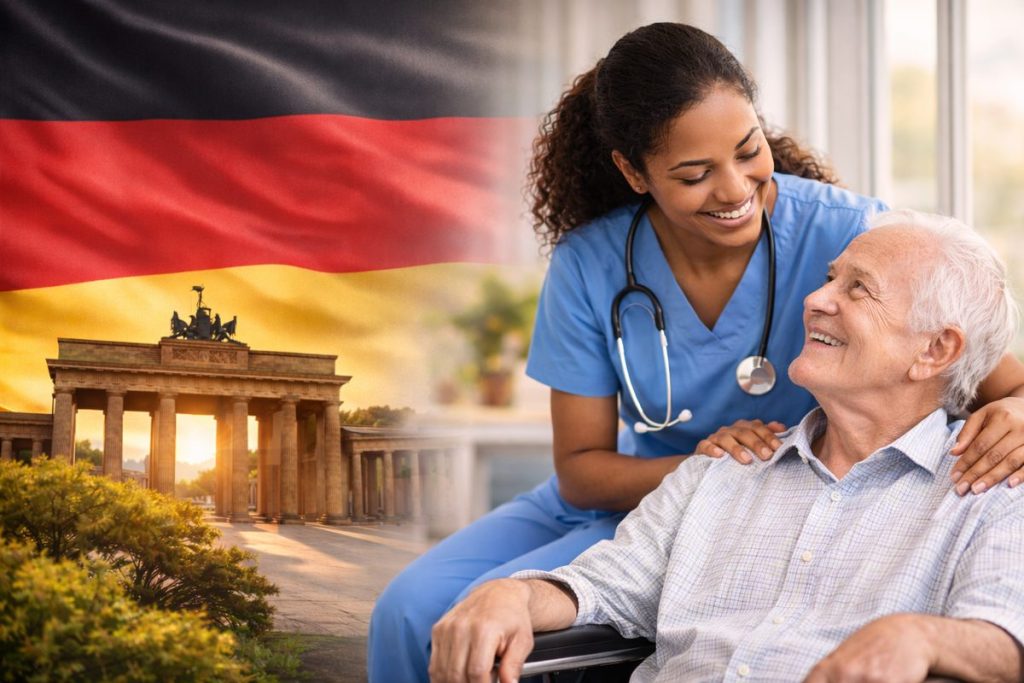
Looking for Care Worker jobs in Germany? You are in the right spot. Germany has become one of the most attractive destinations in Europe for international care workers. With a rapidly ageing population and a nationwide shortage of healthcare staff, care worker jobs in Germany for foreigners are now widely available across nursing homes, hospitals, and home care services.
For trained caregivers, nurse aides, and health assistants, Germany offers stable employment, structured migration pathways, and long-term residence opportunities.
Why Germany Is Recruiting Foreign Care Workers
Germany has one of the oldest populations in Europe. As life expectancy rises, the demand for professional care has increased faster than the local workforce can supply. This gap has pushed employers and the government to actively recruit care workers from outside the EU.
Foreign care workers are valued for their skills, commitment, and willingness to support both elderly and vulnerable patients across the country.
Types of Care Worker Jobs in Germany for Foreigners
International applicants can find employment in several care-related roles:
Elderly Care Worker
Providing daily assistance to elderly patients in nursing homes or private residences, including hygiene support, mobility assistance, and companionship.
Home Care Assistant
Supporting patients in their homes with daily activities, medication reminders, and basic health monitoring.
Hospital Care Assistant
Working under registered nurses in hospitals to assist with patient care, transport, and basic medical tasks.
Nursing Assistant
Supporting professional nurses in long-term care facilities and rehabilitation centres.
These roles are in demand nationwide, especially in rural areas and large urban centres.
ALSO READ: Care Worker Opportunities in New Zealand: High Demand, Visas and Real Career Paths in 2026
Requirements for Care Worker Jobs in Germany for Foreigners
To work legally in Germany as a care worker, foreign applicants must meet several key requirements:
Recognised Qualification
Your caregiving or nursing qualification must be recognised or assessed as equivalent to German standards. In some cases, additional training or adaptation courses may be required.
German Language Skills
Most employers require A2 to B1 level German at minimum. Higher proficiency (B2) significantly improves job prospects and salary potential.
Job Offer from a German Employer
A signed employment contract is required before applying for a work visa. The contract must clearly state your role, salary, and working hours.
Work Visa or Skilled Worker Visa
Foreign care workers apply for a German work visa or skilled worker residence permit through the German embassy in their home country.
Salary Expectations for Care Workers in Germany
Care workers in Germany earn competitive wages compared to many other countries:
- Entry-level care workers: €2,200–€2,800 per month
- Experienced care workers: €2,800–€3,500 per month
- Senior or specialised roles: €3,500–€4,000+ per month
In addition to salary, many employers offer paid leave, health insurance, pension contributions, and overtime compensation.
Visa Pathways for Foreign Care Workers
Skilled Worker Visa
This is the most common pathway for care workers with recognised qualifications and a confirmed job offer.
Job Seeker Visa
Allows qualified professionals to enter Germany for up to six months to look for employment. Once a job is secured, the visa can be converted into a work permit.
Permanent Residence
After working legally in Germany for several years, care workers may apply for permanent residence, allowing long-term settlement and job flexibility.
Family Reunification
Eligible care workers can bring immediate family members to Germany under family reunification rules.

How to Increase Your Chances of Getting Hired
- Start learning German early and aim for B1 or higher
- Prepare a professional CV tailored to German standards
- Gather qualification certificates and references
- Apply to employers experienced in hiring foreign care workers
- Consider accredited training or placement support programs
Is Germany a Good Choice for Foreign Care Workers?
For foreigners seeking stable healthcare employment in Europe, care worker jobs in Germany for foreigners offer strong advantages: job security, legal migration routes, fair wages, and long-term settlement opportunities.
While language learning and qualification recognition require effort, Germany remains one of the most reliable and structured destinations for care workers looking to build an international career.
Frequently Asked Questions About Care Worker Jobs in Germany for Foreigners
Yes. Germany actively recruits foreign care workers due to a nationwide shortage in its healthcare sector. Qualified foreigners can work in nursing homes, hospitals, and home care services once they meet language, qualification, and visa requirements.
Foreign applicants must have a recognised caregiving or nursing qualification. If your qualification does not fully match German standards, you may be required to complete an adaptation course or additional training before full recognition.
Yes. Most employers require at least A2 to B1 level German. Better language skills improve communication with patients, increase employment opportunities, and can lead to higher salaries.
Salaries typically range from €2,200 to €3,500 per month depending on experience, location, and role. Senior or specialised care workers may earn more, along with benefits such as paid leave, health insurance, and pensions.
Most foreign care workers apply for a Skilled Worker Visa after securing a job offer. Some professionals may also enter Germany on a Job Seeker Visa and convert it to a work permit once employed.
Yes. After working legally in Germany for several years, care workers may apply for permanent residence. Family reunification is also possible under German immigration rules.